The quick answer
Use the local converter for a first trace and a vector editor for exact shapes, editable text, and cleanup. Raster and vector editors handle paths differently, so verify that the saved SVG contains the objects you expect.
Convert JPG to SVG in Inkscape: what matters
Inkscape’s Trace Bitmap workflow can create paths from a raster image. Use its official tracing tutorial for the settings in your installed version; the browser converter offers a separate local tracing workflow.
After tracing, move the vector temporarily to confirm that the original raster underneath is not the artwork you are inspecting. Remove the raster only after comparing the two.
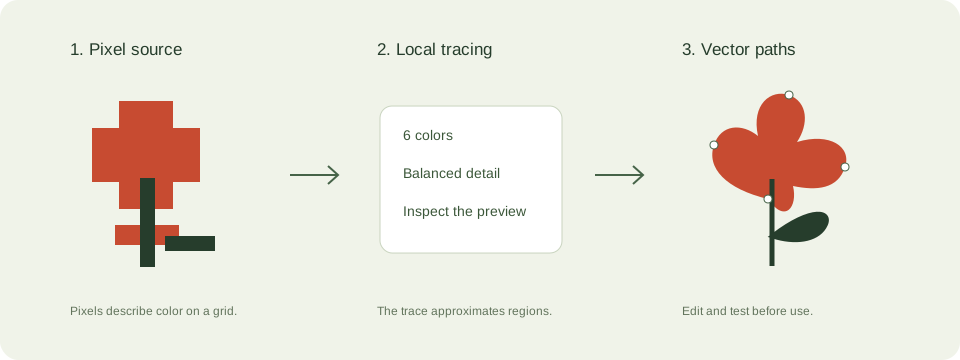
A practical vector editing workflow workflow
- Crop a source file you own and keep the original for comparison.
- Trace locally here or use the documented trace feature in your chosen editor. Start with few colors.
- Inspect the objects and rebuild editable lettering where necessary. Remove unintended background regions.
- Save as SVG, reopen it, and test it in the software or browser where it will be used.
Check these details before you export
- A selection converted to a path is not automatically a faithful multicolor trace.
- Some exports keep linked images. Verify self-contained vector geometry.
- Application features vary by version. Check the current official documentation for your installed software.
Where this workflow stops
This website does not run Photoshop, GIMP, CorelDRAW, or Inkscape and does not install plugins for them.
For a first local trace, use the JPEG to SVG converter. If you are working with transparent artwork, read the PNG transparency guide. Keep an original file so you can compare your changes.
Reference and further reading
Inkscape: official tracing tutorial provides background for this workflow. Platform requirements and editor features can change; check the current instructions for your destination.
Written for JPEGtoSVG by Shahab Uddin. These guides describe practical checks and limitations; they do not promise lossless tracing or automatic machine-ready output.